Reserve Data Confirms Direct Impact on Customer-Backing Wallets
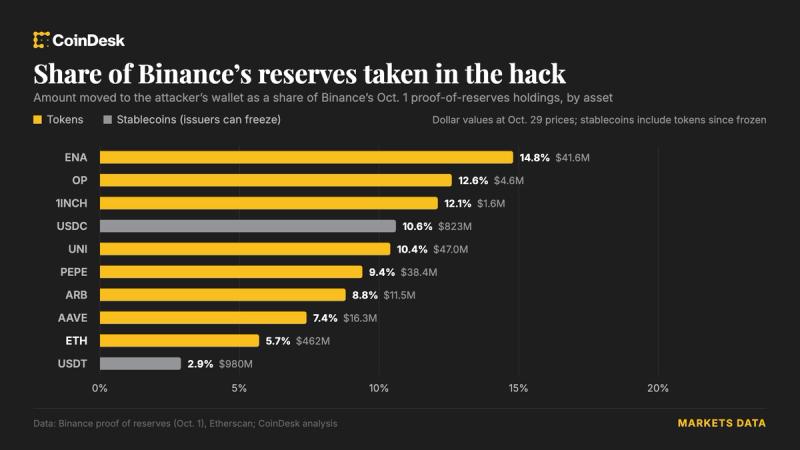
Binance's own on-chain reserve data has confirmed that the wallets drained in a recent security incident were the same wallets designated to back customer balances. According to the exchange's publicly available proof-of-reserves information, the compromised addresses formed part of the custodial structure securing user funds, meaning the theft had an immediate and measurable effect on the backing ratio for customer-held assets.
The reserve data, which Binance publishes to allow independent verification of its solvency, explicitly lists the drained wallets as part of the set of addresses responsible for backing customer balances. This distinction matters because it means the shortfall is not merely an operational loss absorbed from the exchange's own treasury; it directly reduces the collateral standing behind what customers hold on the platform.
Ether Backing Now Estimated at 6 Percent Below Required Level
As a result of the breach, Binance's ether (ETH) backing ratio has fallen to an estimated 6 percent short of the level needed to fully cover customer balances. The exchange would need to replenish the stolen ether before the backing ratio returns to the required threshold.
Until Binance replaces the drained assets, the reserve data will reflect this gap. For customers and observers monitoring the exchange's proof-of-reserves page, the shortfall is visible in the ETH backing figures, which no longer show a one-to-one or greater coverage of customer-held ether balances.
The 6 percent figure represents an estimate based on the available reserve data at the time of reporting. The precise magnitude of the loss and the timeline for full restoration of the backing ratio have not been detailed in the data reviewed.
What the Reserve Disclosure Means for Market Participants
The confirmation that the affected wallets were customer-backing wallets, rather than internal operational addresses, carries implications for how the incident is assessed by counterparties, institutional clients, and regulatory observers. In a proof-of-reserves framework, the integrity of the backing ratio is a central trust metric. A temporary erosion of that ratio, even if the exchange intends to make good the loss, introduces a period of elevated counterparty risk for anyone holding assets on the platform.
Binance's obligation to restore the backing ratio to full coverage remains, and the reserve data will continue to reflect the shortfall until the stolen ether is replaced. Market participants tracking the exchange's solvency metrics should monitor the ETH backing figures closely over the coming period to gauge the pace at which the gap is closed.