Monday's Cocoa Close Shows Currency-Driven Weakness
Both major cocoa benchmarks finished lower on Monday, with the decline tracking a sharp devaluation in the Brazilian currency. December ICE New York cocoa futures (CCZ26) shed 102 points, closing down 1.82% on the session. On the London side, December ICE cocoa #7 (CAZ26) lost 33 points, edging down 0.79%. The synchronized drop across both exchanges points to a single macro driver rather than any cocoa-specific supply or demand shift.
Brazilian Real Plunges on Election Surprise
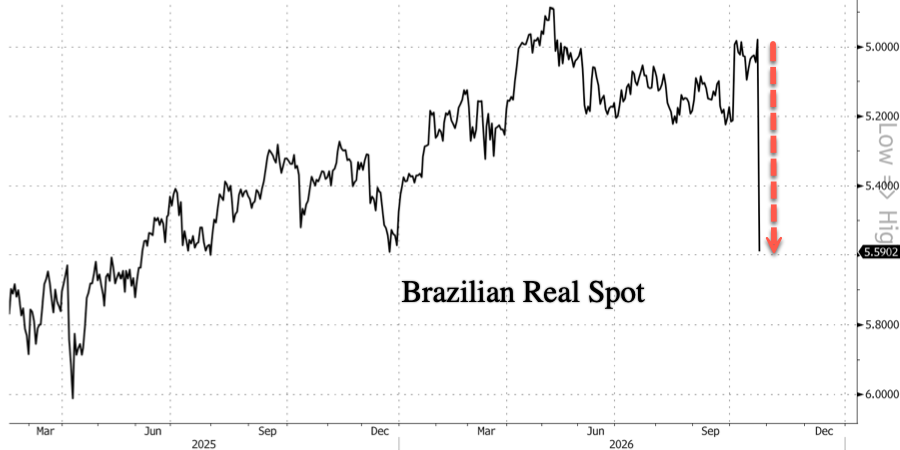
The immediate catalyst was the Brazilian real, which tumbled approximately 9% on Monday. The currency's slide followed a weekend development that caught financial markets off guard: President Luiz Inacio Lula da Silva secured victory in the Brazilian presidential election, a result that sent shockwaves through currency and commodity trading desks. The magnitude of the real's decline was notable, as it far outpaced typical post-election moves and signaled a significant repricing of Brazil-related risk.
Why the Real's Move Matters for Cocoa
Brazil is a major player in global agricultural markets, and the strength or weakness of the real has a direct bearing on how international traders price commodities tied to the country's economy. A 9% drop in the currency compresses the effective value of Brazilian exports when converted into dollar or pound terms, which in turn pressures the pricing of related agricultural contracts on the ICE exchanges. Monday's cocoa session reflected that transmission mechanism, with both the New York and London contracts closing in negative territory in line with the real's steep decline.
Traders monitoring the cocoa complex will likely keep a close eye on Brazilian currency levels in the sessions ahead, as any further volatility in the real could continue to ripple through agricultural commodity pricing on both sides of the Atlantic.