Expert Testimony Highlights Growing Consumer Burden
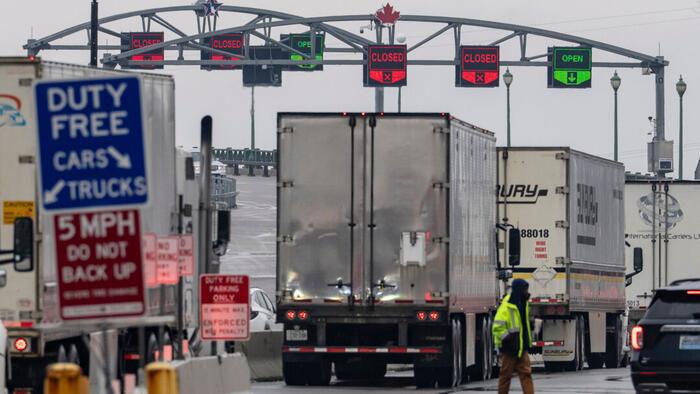
Parliamentarians heard on October 21 that Canada's punitive tariffs on American goods are imposing an estimated $100 million in extra costs on Canadian households every single week, according to testimony delivered to the House of Commons foreign affairs committee.
Trevor Tombe, a professor of economics at the University of Calgary, laid out the financial impact of the counter-tariff package that the federal government rolled out on September 8 against $28 billion worth of U.S. imports. That package was a direct, tit-for-tat response to Washington's tariff measures, which had gone into force on August 22.
The Canadian duties span a wide range of product categories: 15 percent on American farm machinery and household appliances, 25 percent on building materials, and a steep 50 percent on smartphones, furniture, aluminum, and steel.
Tombe warned that the measures shave half a percentage point off the disposable income of Canadians earning less than $30,000 annually and push consumer prices up by roughly 0.25 percent across the board, a figure first surfaced by Blacklock's Reporter.
"Just for consumers, not even for businesses, it's about $100 million per week of additional costs," he told committee members. He went further, questioning whether the spending is justifiable: those costs might be acceptable if the tariffs achieved some non-economic goal, but he could not identify what that goal might be. In his assessment, the purely economic rationale for striking back is "thin."
Government Defends Strategy as Strategic Pressure
The federal government has framed its counter-tariffs as a dual-purpose tool: protecting Canadian producers from the shock of U.S. duties while simultaneously pressuring the White House to roll back its own measures.
Industry Minister Mélanie Joly made that strategy explicit in August, noting that Ottawa deliberately selected products tied to politically influential U.S. states. She described the approach as "wise and strategic" and said the government believes it is the right course of action at a time when it wants to exert political pressure on Washington.
Tombe, however, pushed back on the framing. He argued that Washington's tariff hikes are best understood not as a bilateral disagreement with Canada but as a broadly domestic American policy shift. From his vantage point, Ottawa's retaliation simply loads extra expenses onto Canadian families while producing only a marginal effect on U.S. policy decisions.
He characterized the U.S. tariff moves as the most significant trade-policy overhaul in the nation's 250-year history. To illustrate the scale, he noted that the average U.S. tariff rate worldwide stood at just 2 percent in 2024, surged to 30 percent in 2025, and has since settled at an average of around 11 percent. Notably, the average duty applied to Canadian goods sits at 8 percent — a rate lower than what 93 other countries face.
"So this may be less of a trade war with Canada than a fundamental change in how the United States runs its economy," Tombe observed. He added a technical point: a tariff functions economically as both a domestic consumption tax and a production subsidy at the same rate.
Limited Revenue, Limited Leverage
Despite the political fanfare, Tombe pointed out that Canada's 2025 counter-tariff package generated roughly $4 billion in federal revenue over a six-month period. He stressed a structural reality: for a smaller economy, it is inherently difficult to impose tariffs that meaningfully raise costs in a far larger target economy like the United States.
"There's no evidence that the retaliation we've enacted has changed U.S. behavior," he told the committee, underscoring the limited bargaining power embedded in the strategy.
Tombe also flagged what he called a "trilemma" facing Ottawa. The government simultaneously wants to (1) target goods originating from politically significant U.S. states, (2) hit product categories where Canadian firms are major buyers, and (3) select items for which easy substitutes exist. Achieving all three goals at once, he explained, is extremely challenging — a package satisfying every criterion would be roughly one-tenth the size of a full dollar-for-dollar retaliation.
He further noted that the counter-tariff package in practice fell short of a true dollar-for-dollar response, amounting to approximately 60 cents of Canadian tariffs for every dollar of U.S. duties applied to Canadian goods.