AI Adoption and the Inflation Question
Alicia Garcia Herrero, who serves as chief APAC economist at Natixis, made a pointed observation on Bloomberg TV about the macroeconomic implications of the current artificial-intelligence buildout. In her view, the speed at which firms and governments are integrating AI into their operations carries a hidden inflationary risk—one that materialises if the physical infrastructure required to support those workloads does not keep pace.
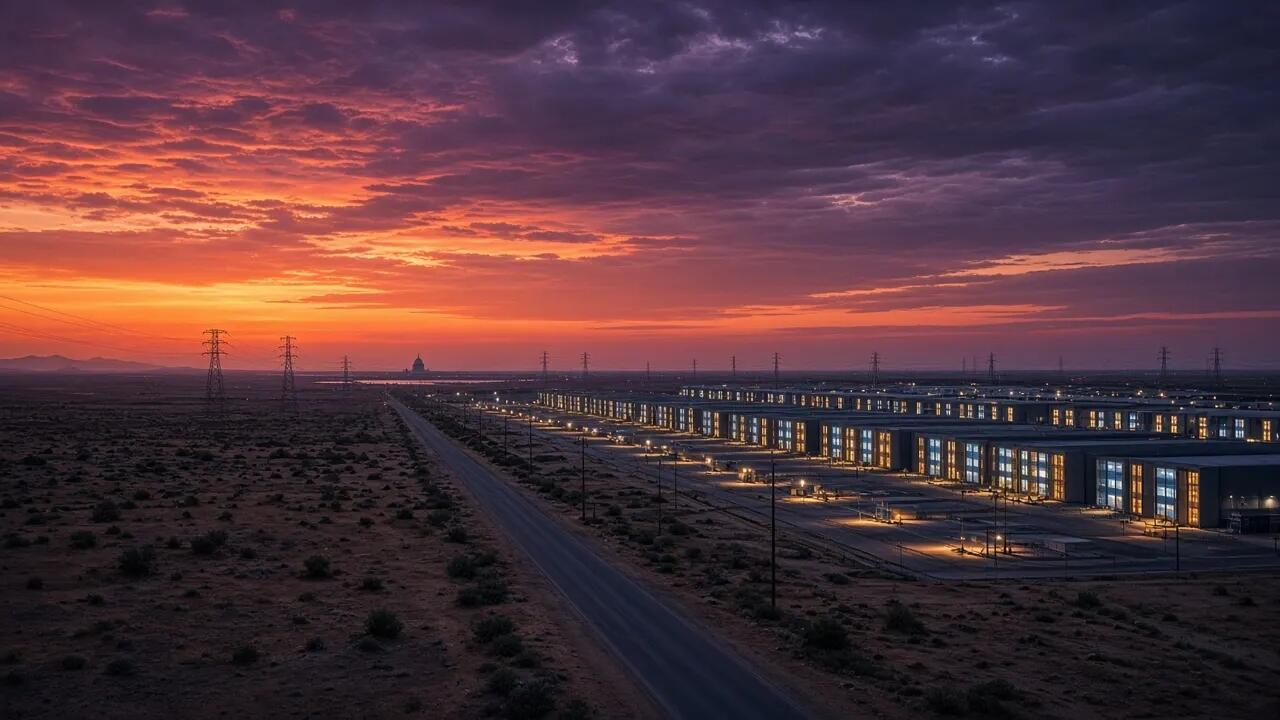
The core of her argument is straightforward in logic: AI systems demand enormous amounts of computational power, and that power must be housed in purpose-built data centres. If the pace of construction lags behind the pace of adoption, the resulting scarcity of available compute capacity will push up costs for every participant in the chain, from cloud providers to end users. Those higher costs, in turn, flow through to prices across the broader economy, contributing to inflationary pressure.
Why Data-Centre Capacity Is the Bottleneck
Herrero's comment highlights a specific transmission channel that many market participants may underweight. The AI industry's appetite for GPUs, high-bandwidth memory, cooling systems, and the real estate to house them all is growing at a clip that construction timelines struggle to match. When supply of compute cannot expand as quickly as demand, the marginal price of access rises. In a traditional goods market, that would simply mean a more expensive product; in the AI context, the product is a foundational input for a vast number of commercial and public-sector activities, amplifying the inflationary effect.
Her framing suggests that the inflation risk is not inherent to AI itself but is conditional on the buildout trajectory. A well-funded, timely expansion of data-centre capacity could absorb the demand surge without significant price pressure. A slower buildout, by contrast, would create a tightening bottleneck that ripples outward.
What It Means for APAC Markets
As chief APAC economist at Natixis, Garcia Herrero's remarks carry particular weight for investors tracking the region's monetary-policy outlook and currency valuations. If the inflationary channel she describes gains traction, central banks in Asia-Pacific may face a more complex balancing act: supporting technological competitiveness while managing the price-level consequences of infrastructure scarcity. For forex markets, that tension could influence rate differentials, capital flows, and the relative strength of currencies in economies where AI adoption is advancing fastest.
The comment, delivered on Bloomberg TV, adds a concrete, infrastructure-focused dimension to the broader debate over whether the AI boom is a net disinflationary or inflationary force for global price stability.