A Familiar Tension Between Bonds and Stocks
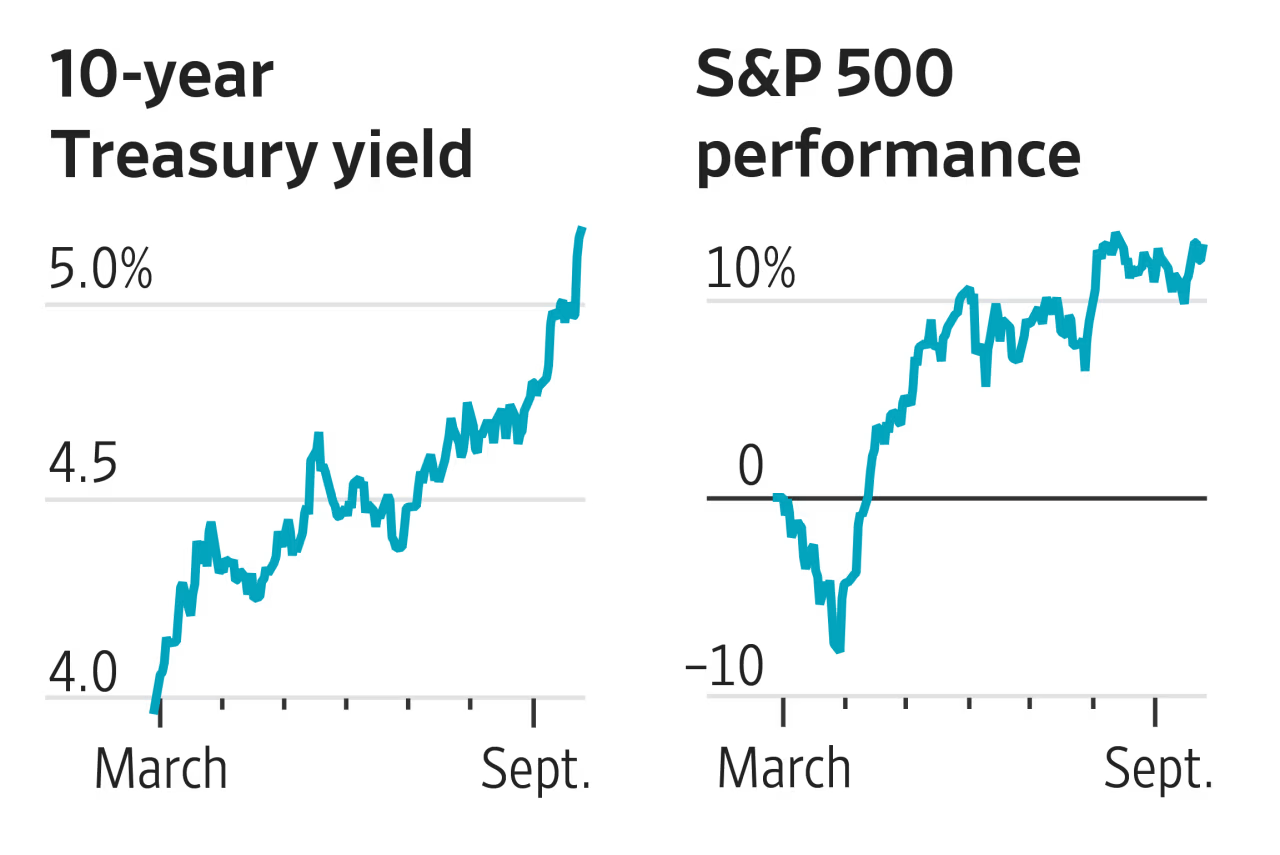
The current macro landscape presents a puzzle that has played out before: government bond yields are climbing at a pace that, in prior decades, would have triggered a broad equity selloff. Yet stock indices are proving unusually resilient, refusing to capitulate despite the rising cost of capital. This divergence between fixed-income and equity markets is at the center of a heated debate among portfolio managers, strategists, and retail investors heading into 2026.
The core of the tension is straightforward. Higher yields typically compress equity valuations by raising discount rates and making bonds a more attractive alternative to risky assets. When that transmission mechanism fails to operate as expected, it forces investors to ask whether the relationship between rates and stocks has structurally changed, or whether a correction is simply delayed.
Lessons from Two Divergent Episodes
History offers two instructive reference points. In 1994, a rapid tightening cycle sent bond yields surging, and equity markets reacted with pronounced panic. The Fed's aggressive rate-hike program that year shattered the complacency of the early-1990s bull run, and investors who had been complacent about inflation were forced to reprice their positions. The episode demonstrated that when yields move quickly and decisively, stocks cannot indefinitely ignore the signal.
The 2016 experience, by contrast, produced an almost opposite outcome. Despite rising yields and a series of geopolitical shocks, equity markets closed the year on a positive note. Investors who had braced for a sell-off found themselves cheering instead, as earnings resilience and accommodative central-bank stances in other regions absorbed the rate pressure. The 2016 episode showed that the bond-stock correlation is not a law of physics; it can break down when other forces—corporate profitability, liquidity conditions, or policy expectations—dominate the narrative.
The 2026 Question: Panic, Resilience, or Something New?
Now, as markets look toward 2026, investors are debating which of these two historical templates is more relevant. The 1994 panic scenario warns that sustained yield increases eventually erode equity excess returns, while the 2016 resilience scenario suggests that strong fundamentals and supportive policy can keep stocks elevated even in a rising-rate environment.
What compounds the uncertainty is that 2026 arrives with a different macro backdrop than either prior episode. The composition of market participants, the scale of central-bank balance sheets, and the degree of fiscal involvement in bond markets all differ from the mid-1990s and mid-2010s. That means neither historical analogy is a perfect fit, and the "correct" response may lie somewhere in between a full-blown repricing and a continued decoupling.
For investors, the practical takeaway is one of vigilance rather than alarm. The historical record does not prescribe a single outcome, but it does underscore that the bond-stock relationship can swing sharply in either direction. Positioning that assumes perpetual equity resilience in a rising-yield world carries risk, just as positioning that assumes an automatic selloff may miss a repeat of 2016-style deflation of fears. As the debate intensifies, the 1994 and 2016 episodes remain the two most frequently cited cautionary and reassuring tales in the current discussion.