
U.S. Forces Neutralize Three Iranian Crude Carriers
American military units carried out strikes against three Iranian oil tankers on Saturday, according to a statement from U.S. Central Command (CENTCOM). The operation was a direct response to what CENTCOM described as a ballistic missile launch by the Islamic Revolutionary Guard Corps (IRGC) aimed at two U.S. Navy vessels operating in the region.
The strikes resulted in the permanent disabling of one crude carrier operating off the coast of Kharg Island and a second vessel near Jask. A third oil tanker was hit in the waters of the Gulf of Oman. CENTCOM confirmed that the targeted U.S. warships—an aircraft carrier and a guided-missile destroyer—successfully evaded the incoming missile salvoes, and no American service members were injured in the incident.
Senior Officials Frame the Escalation as a Calibrated Retaliation
Admiral Brad Cooper, who commands CENTCOM, issued a pointed statement on Saturday directing a message at the IRGC. He warned that if Iran fires at two U.S. ships, Washington will respond by inflicting an even greater economic toll, specifically by taking out three Iranian vessels. Cooper added that the United States will not hesitate to protect its forces and, if warranted, to dismantle what he characterized as Iran's limited and exposed oil fleet.
Defense Secretary Pete Hegseth amplified the warning later in the day through a post on the social platform X. He stated plainly that if Iran continues to fire on U.S. naval assets, the response will be to destroy and sink Iranian oil tankers, and that the only path to de-escalation is for Tehran to cease its attacks on the U.S. Navy.
Iranian authorities had not issued an official response to Saturday's strikes as of the latest reporting.
Broader Context: Oil Flows, Blockades, and the Strait of Hormuz
The tanker strikes land against a backdrop of already severely constrained Iranian oil exports. Iran ranks as the third-largest crude producer within the Organization of the Petroleum Exporting Countries. Prior to the current conflict, roughly 90 percent of the nation's crude shipments moved through the port at Kharg Island. That pipeline has been effectively severed by a U.S. naval blockade on Iranian oil exports that took effect in mid-April.
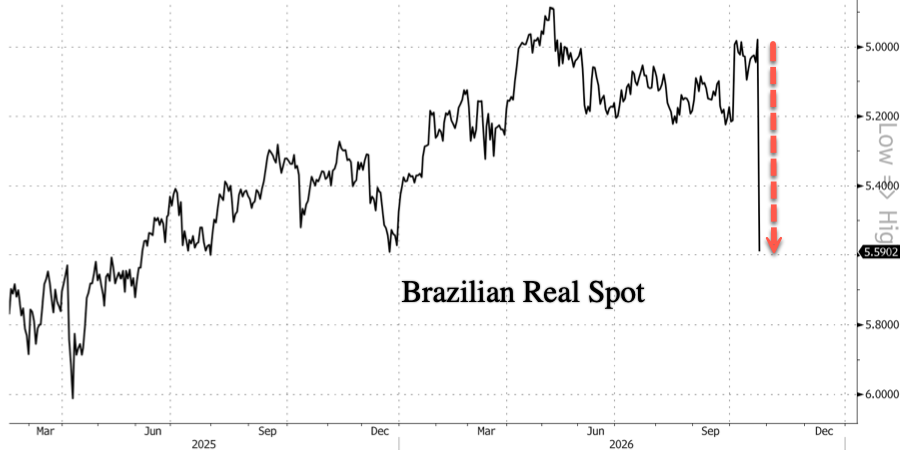
The wider U.S.-Iran confrontation has also brought commercial shipping through the Strait of Hormuz to a near standstill, a waterway that historically carried a substantial share of the world's seaborne oil supply. The disruption has sent shockwaves through global energy markets and heightened volatility across currency and commodity markets.
Tensions had been ratcheting up even before Saturday's strikes. In June, President Donald Trump publicly threatened to seize Kharg Island outright as Washington continued its campaign of military operations against Iranian targets. On August 31, Trump took to social media to share an artificial-intelligence-generated video depicting the island being destroyed by explosives.
Sanctions Tighten Around Iran's Financial Network
The military escalation coincides with a parallel financial pressure campaign. Just one day before the tanker strikes, the U.S. Treasury Department announced sanctions targeting a small Turkish investment bank, Golden Global Yatirim Bankasi Anonim Sirketi, along with two of its subsidiaries: Golden Global Varlik Kiralama Anonim Sirketi and Golden Global Portfoy Yonetimi Anonim Sirketi.
Treasury alleges that the three entities were set up specifically to enable what it calls Iran's "rahbar network" to move oil revenues from China into Turkey, where the funds could then be converted into physical cash and gold through so-called rahbar money exchangers linked to an arm of the Revolutionary Guard.
Golden Global Bank becomes the second major financial institution hit under the Trump administration's "Operation Economic Outcast," a strategy designed to isolate Tehran diplomatically and financially by sanctioning its overseas business partners rather than relying solely on kinetic military action.